A dog is a very common pet in the world. We buy or adopt a puppy for protection, companionship, or as buddy but not all of us know enough about the breed.
Dangerous Breeds->
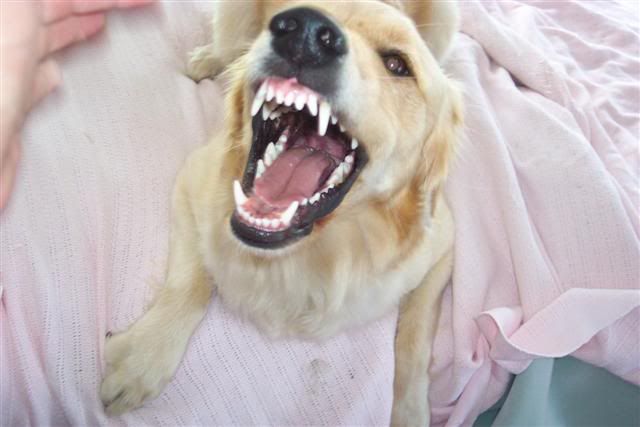
Aggressive Golden Retriever
Boxer
Dalmatian
Chow-Chow
Doberman Pinscher
Great Dane
German Shepherd
Alaskan Malamutes
Siberian Husky
Rottwiler
Pitbull
The breeds above are named tagged as DANGEROUS BREED because they are the most popular dogs for biting people. Though these dogs were harmless when they were born but when they came to their owners who gave them nothing but neglect changed there attitude. Do you know that in such conditions a Golden Retriever can also be dangerous!
The dog seen on the left is the same breed of dog seen on the right. Surprise! The world's top dangerous dog, The Pitbull
is so calm on the left but the same breed is aggressive on the right. So treat your puppy with love and care, and you'll see the breed said to be aggressive is the calmest of all.
Bulldogs on sale! Yorkie puppies available here! Have you ever wondered where all these cheap puppies for sale in pet stores come from? The answer is that they are produced in factory-like environments known as “puppy mills.” Puppy mills are large-scale dog breeding operations where profit is given priority over the well-being of the dogs. Puppy mills treat dogs like products, not living beings, and usually house them in overcrowded and unsanitary conditions without adequate veterinary care, socialization, or even food and water.The cute puppies for sale at your local mall were probably bred from dogs who don’t play outside or get groomed. Puppy mill dogs are typically kept in cages with wire flooring that injures their paws and legs—and cages can be stacked up in columns (which means waste falls on the dogs housed below them). Compromised health and conditions like matting, sores, mange, severe dental disease and abscesses are often widespread. Many puppy mill puppies are born with or develop overt physical problems that make them unsellable to pet stores—which means they end up abandoned or just left to die. Many sick puppies do manage to end up at pet stores, though, where the new puppy owner unknowingly purchases the sick dog.
Breeding dogs at the mills sometimes spend their entire lives outdoors, exposed to the elements—or crammed inside filthy structures. Female dogs usually have little to no recovery time between bearing litters. When, after a few years, the females can no longer reproduce or when their breed goes out of “style,” the dogs are often abandoned, shot, or starved until they eventually die.
Many pet stores with cute puppies for sale will tell you that they don't get their puppies from puppy mills. They'll say their puppies are all from "USDA licensed breeders." If you dig a little deeper into what that actually means, you'll find that it's not worth much! The standards of care required by the USDA are woefully inadequate and not what most of us would consider humane. They leave a lot of room for dogs to be severely mistreated. Even if they were adequate, they're not enforced! Take a look at a scathing report done by the Inspector General on USDA's lax enforcement of the law regulating breeders (heads up, it's a little graphic!) and judge for yourself whether USDA licensing of puppy mills is enough to make you shop at stores that sell puppies. We don't think it is! In fact, you only have to be licensed by USDA as a commercial breeder if you are selling puppies to pet stores or brokers! So USDA licenser is actually a pretty good indicator that the breeders are, in fact, puppy mills! Small hobby breeders who sell their dogs directly to the public, including those who only sell their puppies on-line, do not have to be licensed or inspected by USDA.
What To Do to Not Support These Industry
Most pet shop puppies come from puppy mills, and so do most dogs sold over the Internet. Pet shop puppies are separated from their mother at as young as six weeks of age. The health of the puppies is not always guaranteed. Purchasing a puppy for sale at a pet store or on-line often supports the horrible puppy mill industry. Buying anything in pet stores that sell puppies supports the industry, too!! Buy all your pet supplies—toys, pet food, kitty litter—from stores that do not sell puppies, or buy your pet supplies on-line from websites that do not sell puppies.
The PETS that we talk about each day like dog, cats, rabbits, birds and many more, How much do we actually know about them? Do we know there basic requirements? What food is supposed to be given?
Many of us think that animal are not like us. They think they don't have emotions, but as a matter of fact we forgot we call dogs as a" Man's Best Friend because they are loyal and loving so why do we think animals don't have feelings? As people forget that the animals have emotions they use them for there profit like "PUPPY MILLS"
Do you know that the pet which we think are easy to take care of may be harder than your expectation or it could be vice-versa. This is why each one of us need to know the right knowledge about the pet we own or the pet you are going to buy because none of us would like our pets to end up in the shelter as we weren't able to take care of them!
" I had to loose my pup because of its violent behaviour, as we weren't able to take care of it. We did not have enough knowledge about its breed which was why we had to sell it"
As responsible owners of your pets you must chose one that suits your life style not because they look cute.
The main pets that people own are given below in groups ->


 The dog seen on the left is the same breed of dog seen on the right. Surprise! The world's top dangerous dog, The Pitbull


